
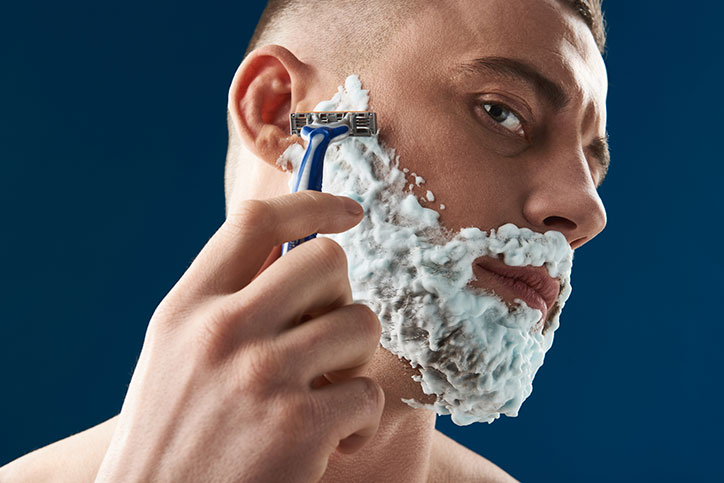
A close shave is the result of a mechanical process called hysteresis, where a razor blade lifts the hair follicle slightly before cutting it. Because human hair is as structurally resilient as copper wire of the same diameter, achieving a “smooth” finish requires nanometer-sharp blades and high-viscosity lubricants like Bump Stopper Arctic Shave Gel to minimize friction and prevent the blade from damaging the skin’s elastic barrier.
When a blade makes contact with a hair, it doesn’t just cut; it pulls.
The Warning: For men with curly hair or sensitive skin, this can lead to Pseudofolliculitis Barbae (razor bumps) as the hair retracts too far and grows into the follicle wall. This is why using Bump Stopper-2 is essential for neutralizing the inflammatory response post-shave.
The Process: In a multi-blade system, the first blade (the “leader”) catches the hair and pulls it upward. Before the hair can retract, the second and third blades cut the shaft.
The Outcome: This allows the hair to be cut below the surface of the skin.
The angle of the blade edge is critical. If it’s too blunt, it won’t cut efficiently and may cause irritation or pulling. Most razor blades are honed to a fine angle between 20 to 30 degrees. This ensures a sharp edge that can slice cleanly through hair while minimizing the risk of nicks and cuts.
In safety razors and cartridge razors alike, the handle design and head geometry work together to maintain the optimal cutting angle. A proper shaving technique—holding the razor at about a 30-degree angle to the skin—is key to making the most of this design.
When you shave, the skin’s flexibility plays a huge role. A taut surface allows the blade to move more easily and reduces the risk of cuts. That’s why it’s recommended to shave with short strokes and stretch the skin gently with your free hand.
Lubrication also matters. Shaving creams, gels, and soaps reduce friction, create a cushion between blade and skin, and help the razor glide smoothly. This reduces drag and helps maintain the integrity of the blade edge.
Multi-blade razors might seem like a marketing gimmick, but there’s real physics involved. Each blade works in a sequence: the first lifts the hair, and subsequent blades cut it down progressively. However, more blades also mean more contact with the skin, which can cause irritation if your skin is sensitive. This is why some people prefer single-blade safety razors, especially if they’re prone to razor burn or ingrown hairs.
A close shave isn’t just about using any razor—it’s about using the right one, at the right angle, with proper skin preparation. By understanding how blades actually interact with your skin and hair, you can make smarter choices about your shaving routine, reduce irritation, and enjoy smoother results every time.